
I have been negligent of late and I sincerely apologize for that. I hope this post will make up for it. There has been an incredible bounty of butterflies flitting about the woods and gardens in my area and I would like to share them with you.
And I must give a shout out to a friend for giving my a book on butterflies of North America! You know who you are, so thanks!
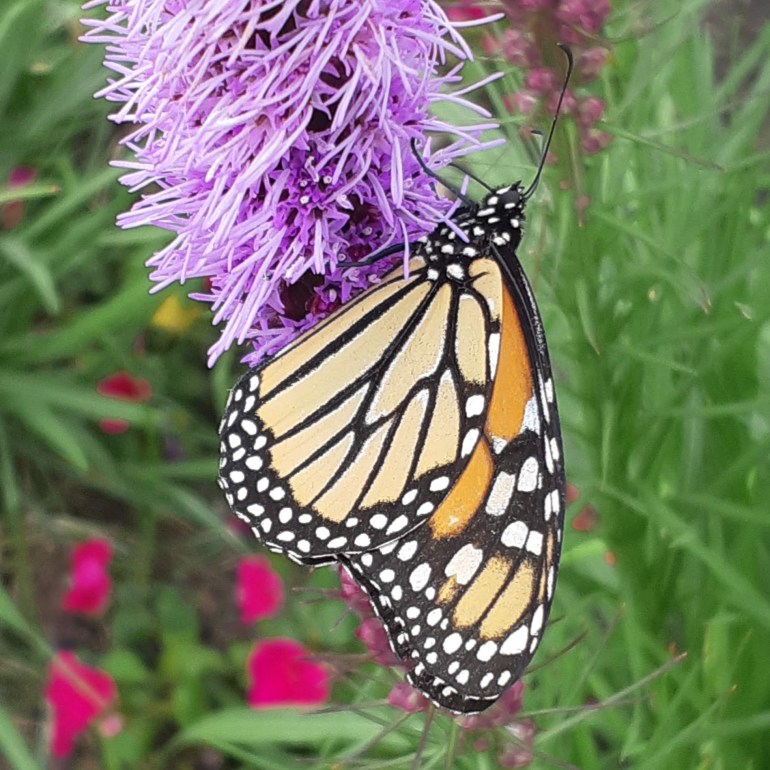
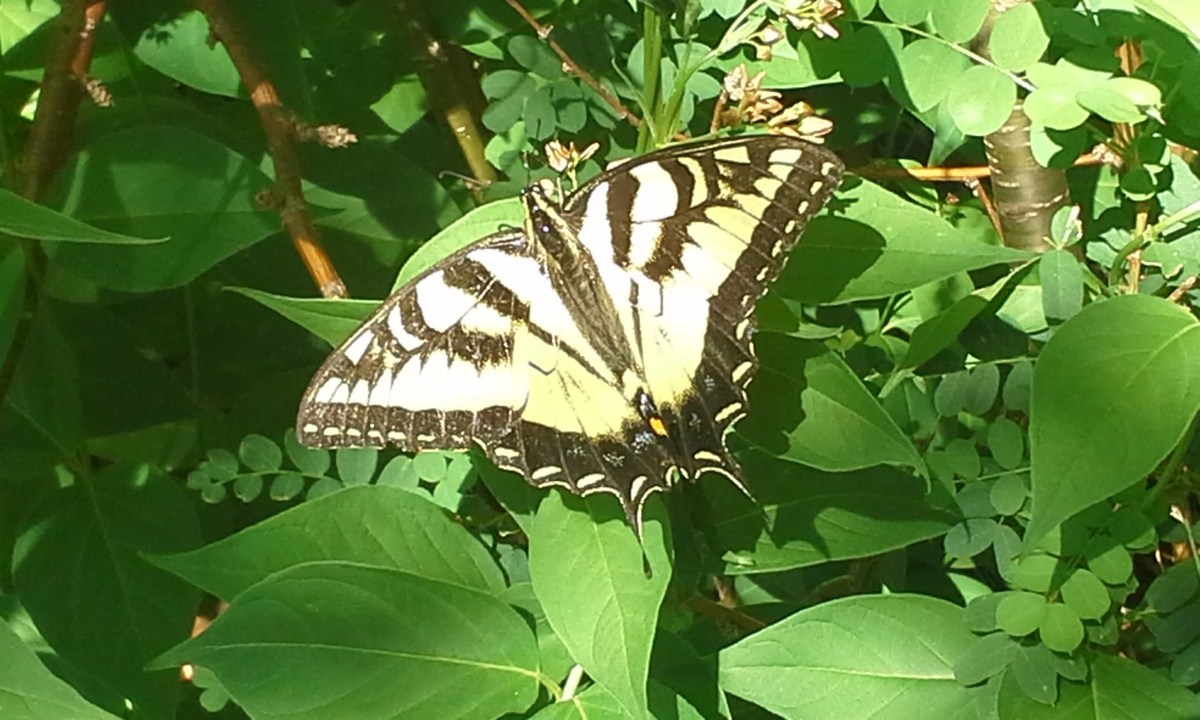
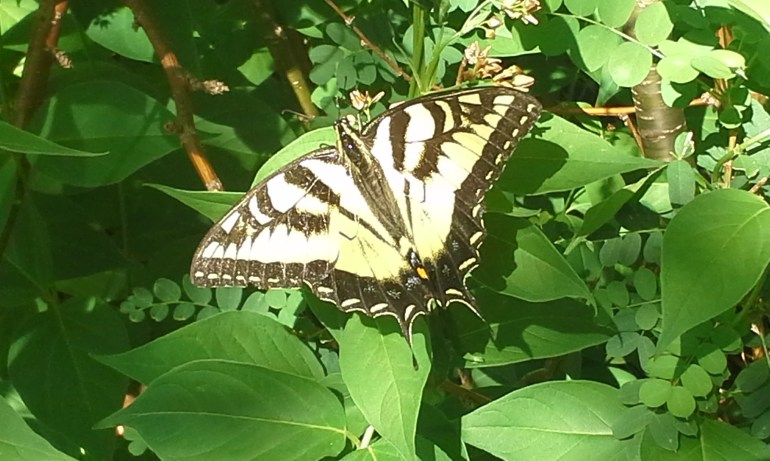
So except for the above image of the very familiar Eastern Tiger Swallowtail butterfly, which is probably my favourite butterfly that I see in my area, I will talk about the beautiful monarch butterfly of much fame.
It’s true, they used to be much easier to see up here in summer. As a child, they really used to be the most common of all the ones I saw. Happily, I saw some milkweed blooming in the park last week for their caterpillars to munch on. The ones fluttering around right now will only have a lifespan of about 30 days, but the generation to emerge in August here in Toronto will be the ones to make the long journey back to Mexico!
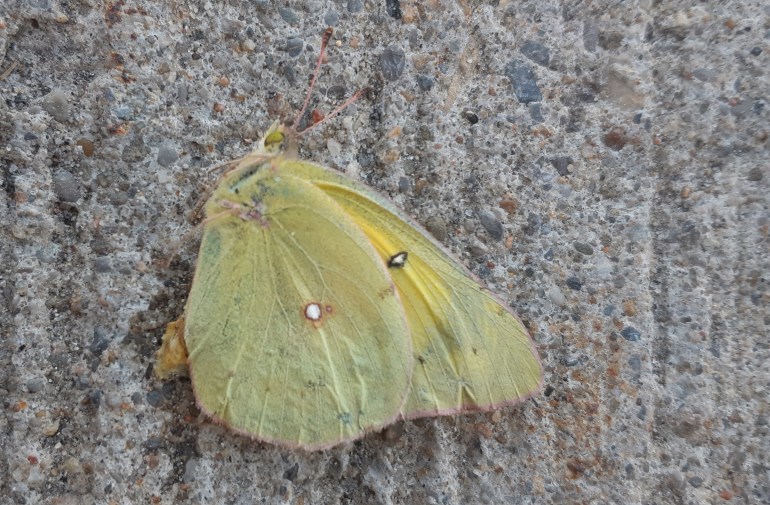
The next butterfly on our list is the Clouded Sulphur. Up until a few years ago when I picked up a free publication from my local library on butterflies of Toronto, I didn’t know that there are several species of yellow butterflies. I thought they were all the same! The Clouded Sulphur is a resident butterfly which means they overwinter here as caterpillars and emerge in the spring. They prefer meadows over woods. Fortunately for me, the park where I go for walks regularly has both flower meadows and woods, so I get to see a large number of different species of butterfly.
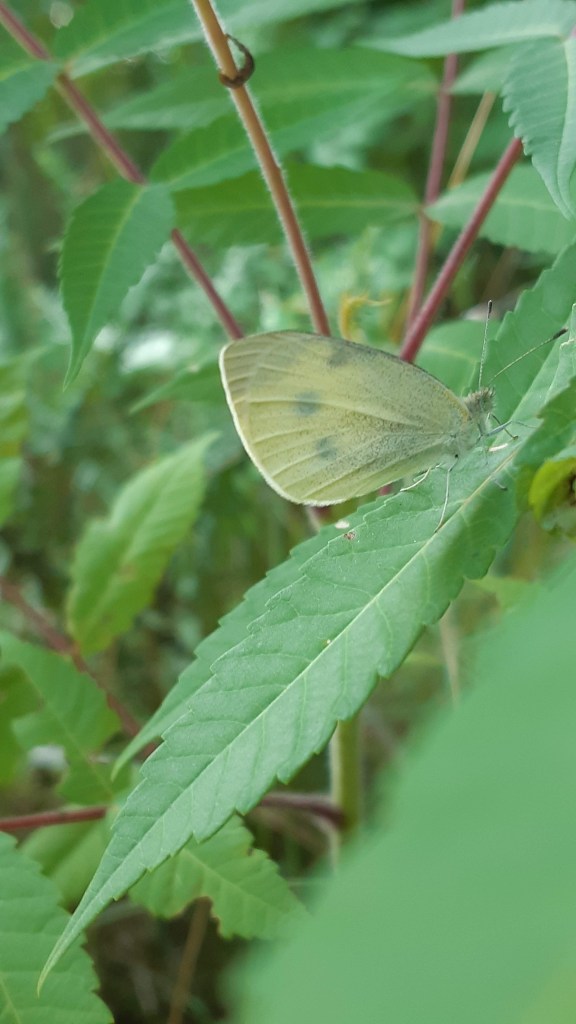
Oh, the dreaded cabbage white butterfly! The reason I had a ton of holes in my cauliflower leaves last year in my garden. Grrr! These are not native to North America and have become resident in the area, so unfortunately we will probably be with them forever.
They are also literally everywhere. I see them flitting about my garden and the neighbours’. This one I caught in the park. they like to eat mustards and nasturtiums as well as cabbages. That must be why they are drawn to the park, I saw some cresses down there as well as what looks like some “weedling” cabbages (plants that have sprouted from seed from someone’s garden).
The next butterfly I would like to talk about is one that surprised me in my garden last year. It was feasting on some spoiled strawberries that I missed in my alpine strawberry patch. It’s called a Question Mark butterfly. This fellow was very worn. Perhaps just escaped some butterfly snacking bird?
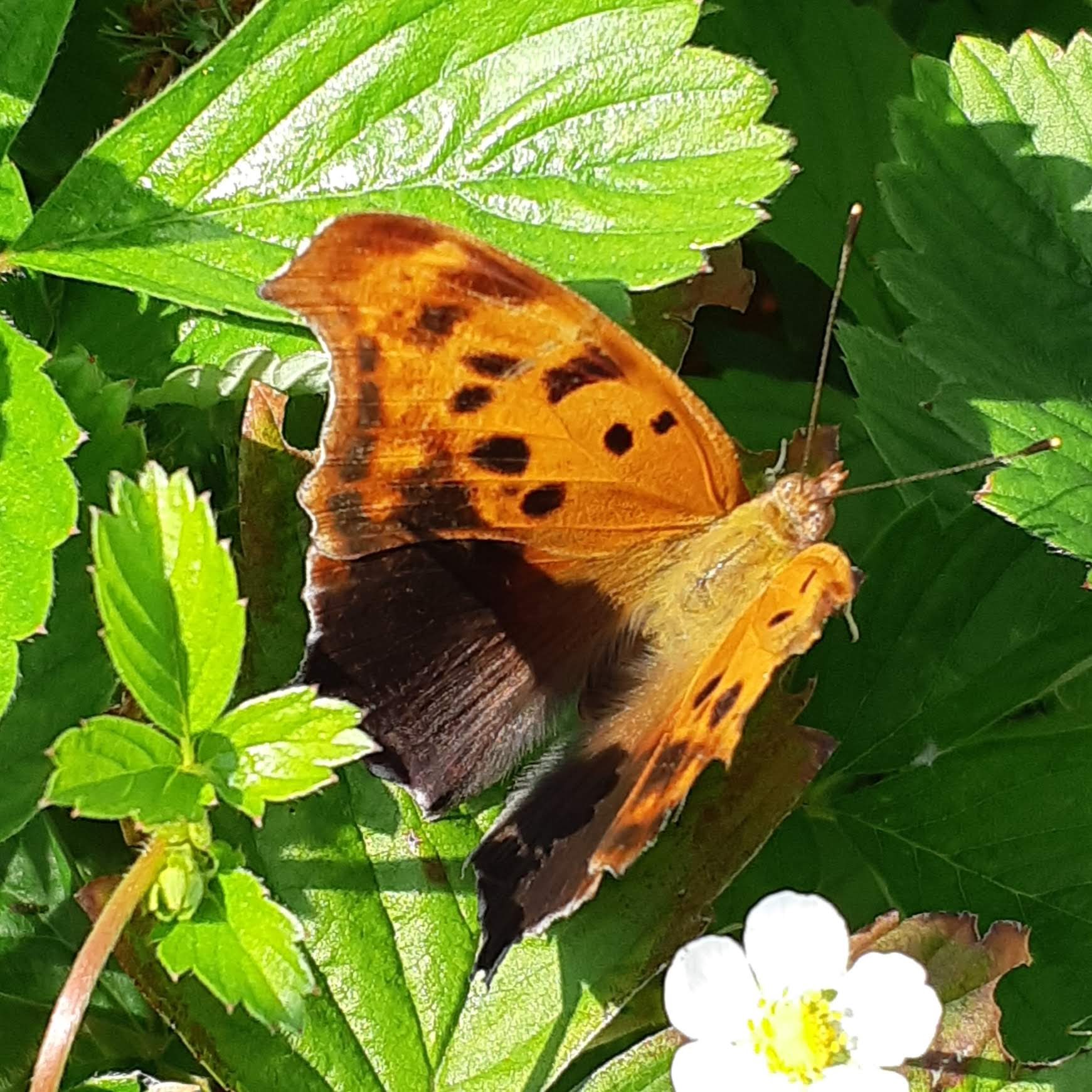
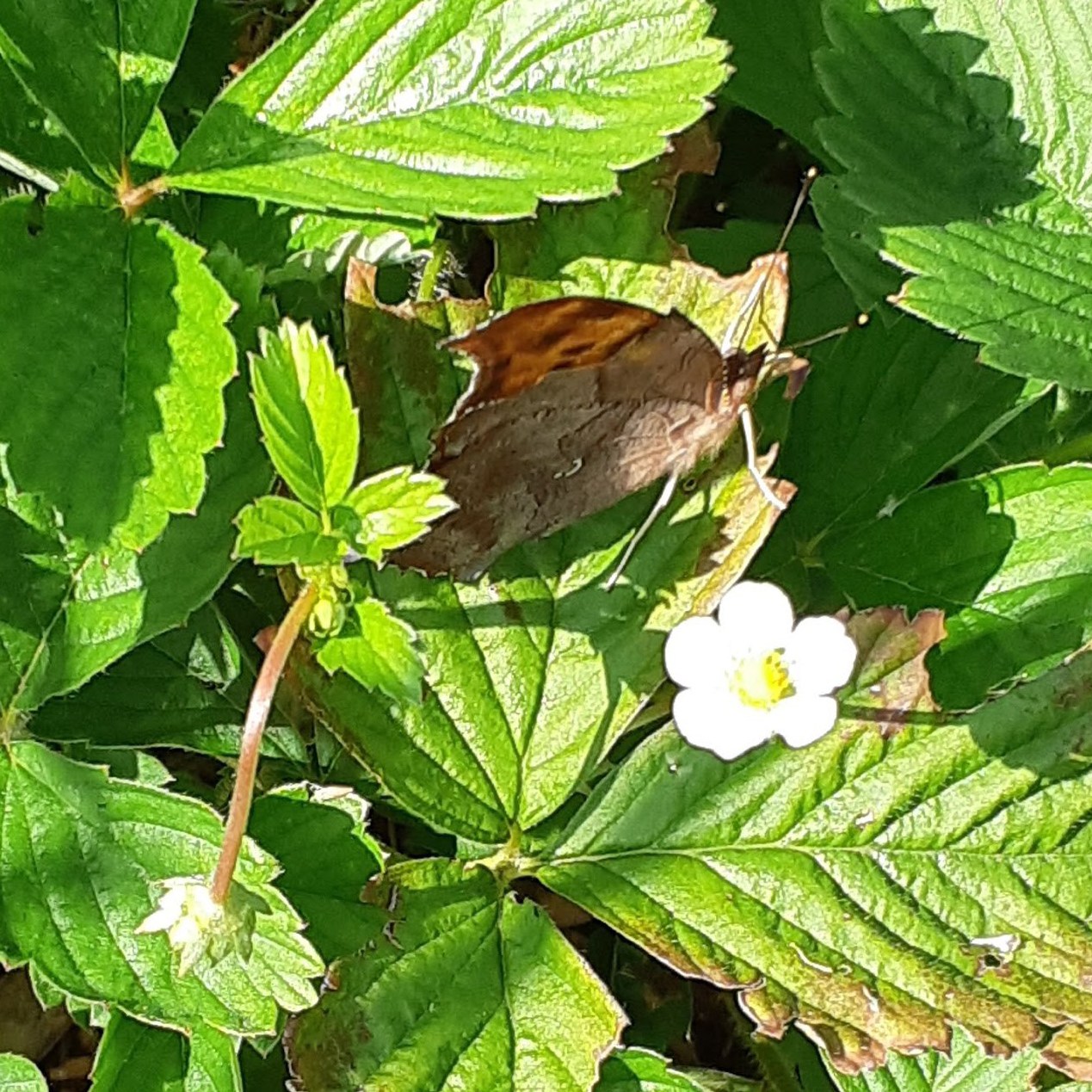
Question Mark Butterfly, Polygonia interrogationis
This butterfly helped to really spark my interest in the brown butterflies. Up until then, they were just boring and brown. And I had never expected to see a Question Mark in my garden! It is a common butterfly, but a cool one. If you look at the right hand picture, you can just make out the silvery ? which gives this butterfly its name. They are normally woodland dwellers that, get this, eat things like tree sap, rotten fruit and dung! And yes, that is it’s real Latin name!
Below is the Eastern Comma butterfly, like its cousin the Question Mark, it’s named for the silvery comma on the underside of its wing. It too prefers the forest (where I saw this one) and similar food sources. The Comma is a resident that hibernates during winter while the Question Mark is an annual migrant to Toronto.
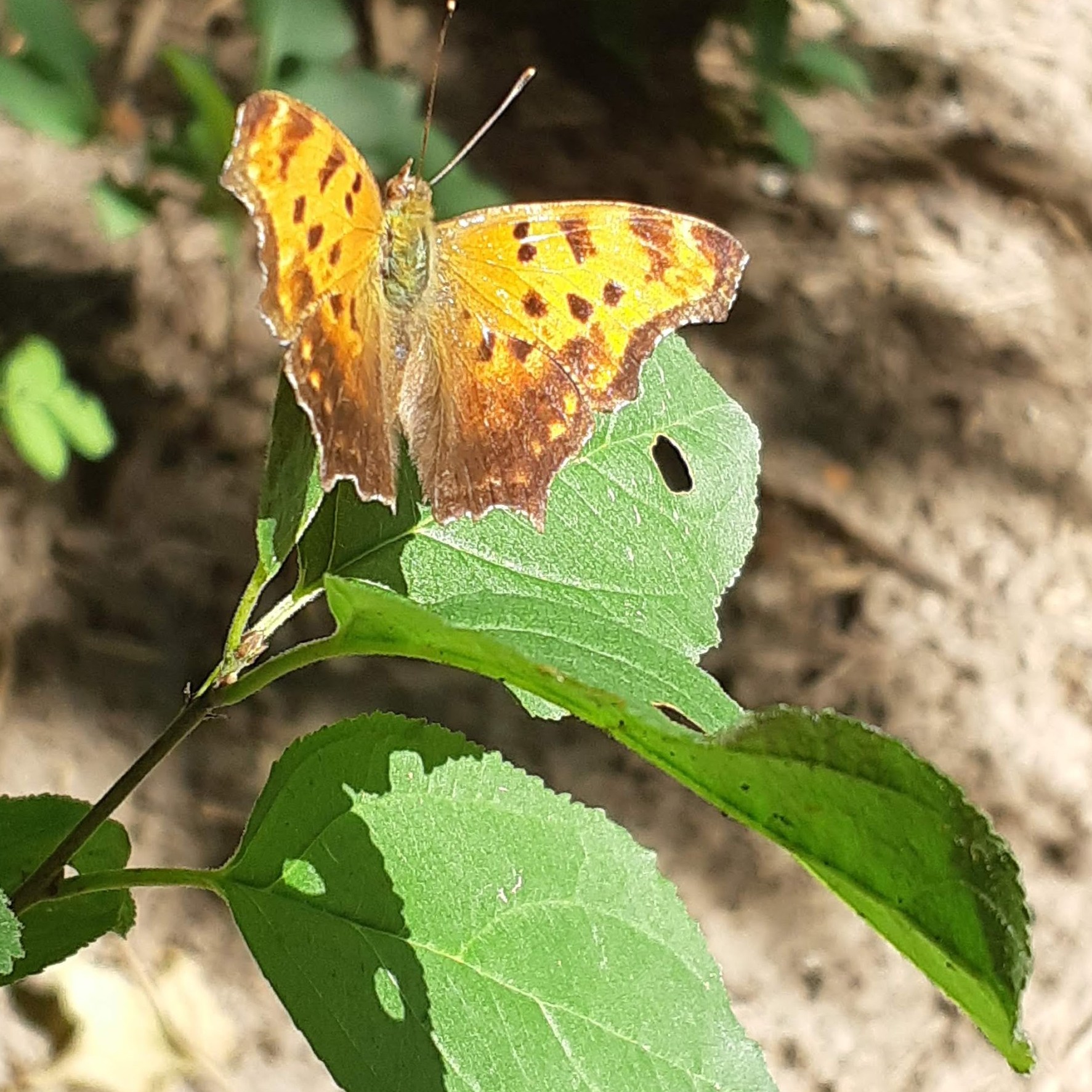
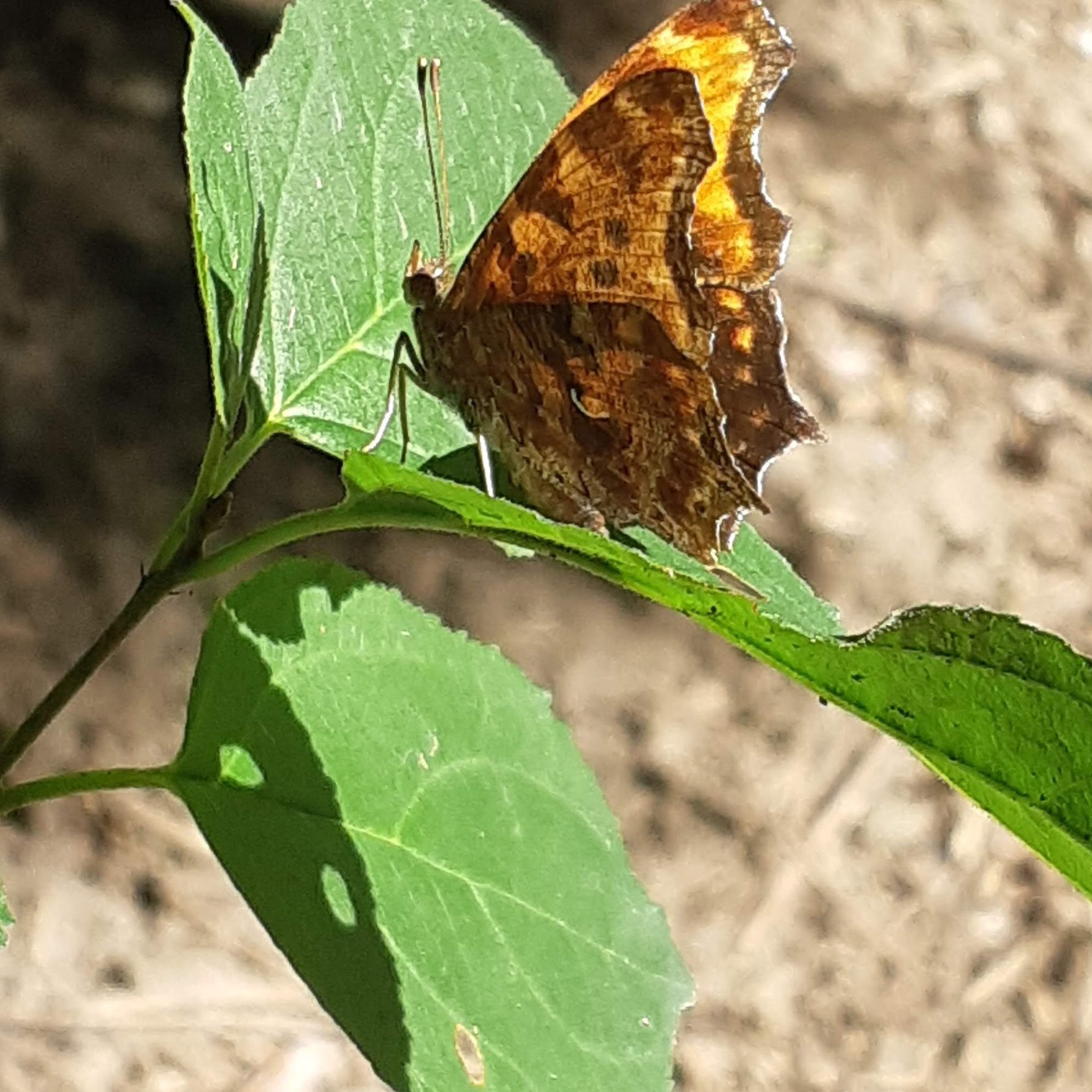
Eastern Comma Butterfly, Polygonia comma
The next butterfly I see often in my rambles is the Mourning Cloak. This was the first butterfly that got me interested in taking their portraits. They are a resident butterfly that overwinters here as an adult (like the Comma) and their lifespan can be up to 10 months.
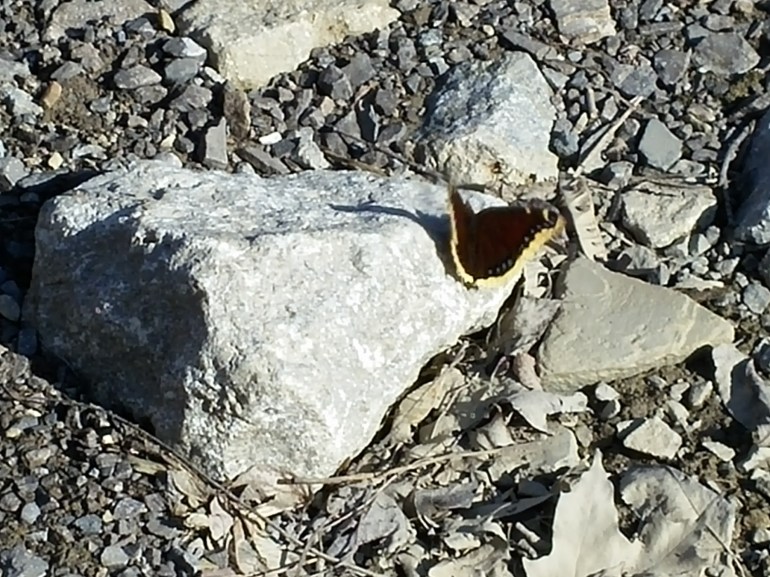
This one was braving the chilly April weather. I love seeing them out in spring. It feels like the good weather has finally returned when they appear.
The Mourning Cloak is one of the larger butterflies that live here, it’s about 3 inches (10 cm) from tip of wing to tip of wing when they are spread like in the picture.
There are couple of other butterflies that I have just come to appreciate this year. They are two little brown butterflies called the Little Wood Satyr and the Common Wood Nymph. The complex patterns on their wings are so beautiful.
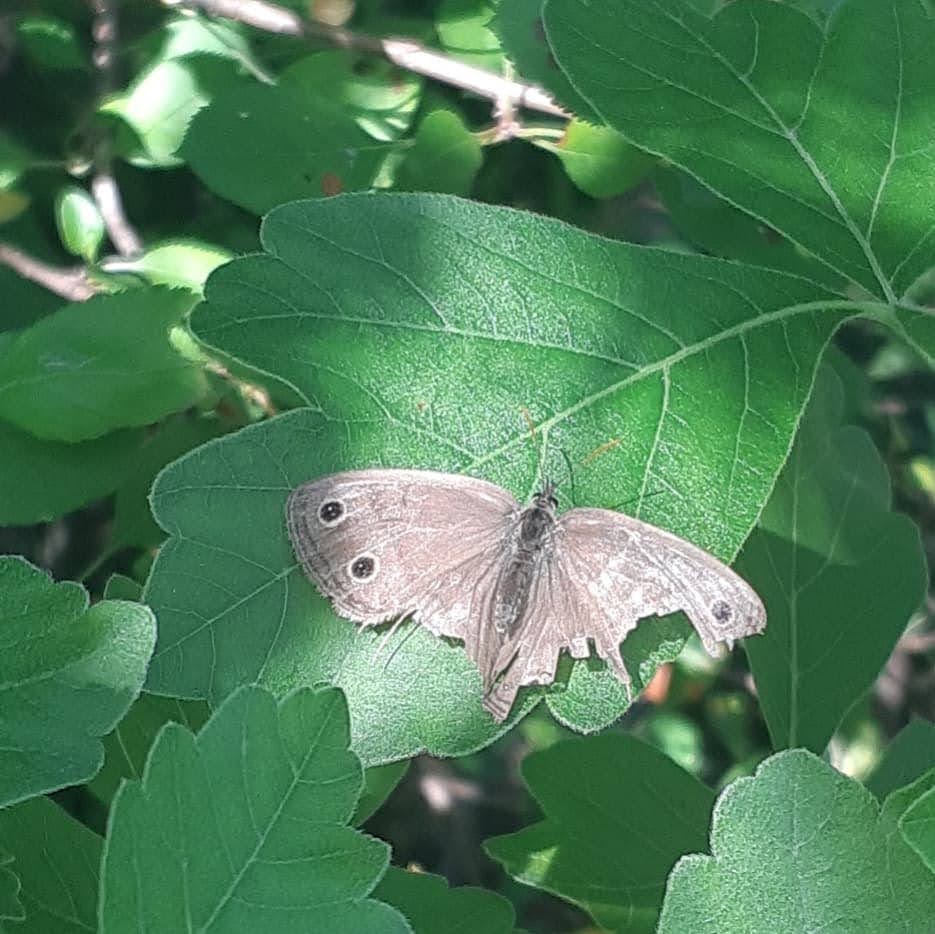
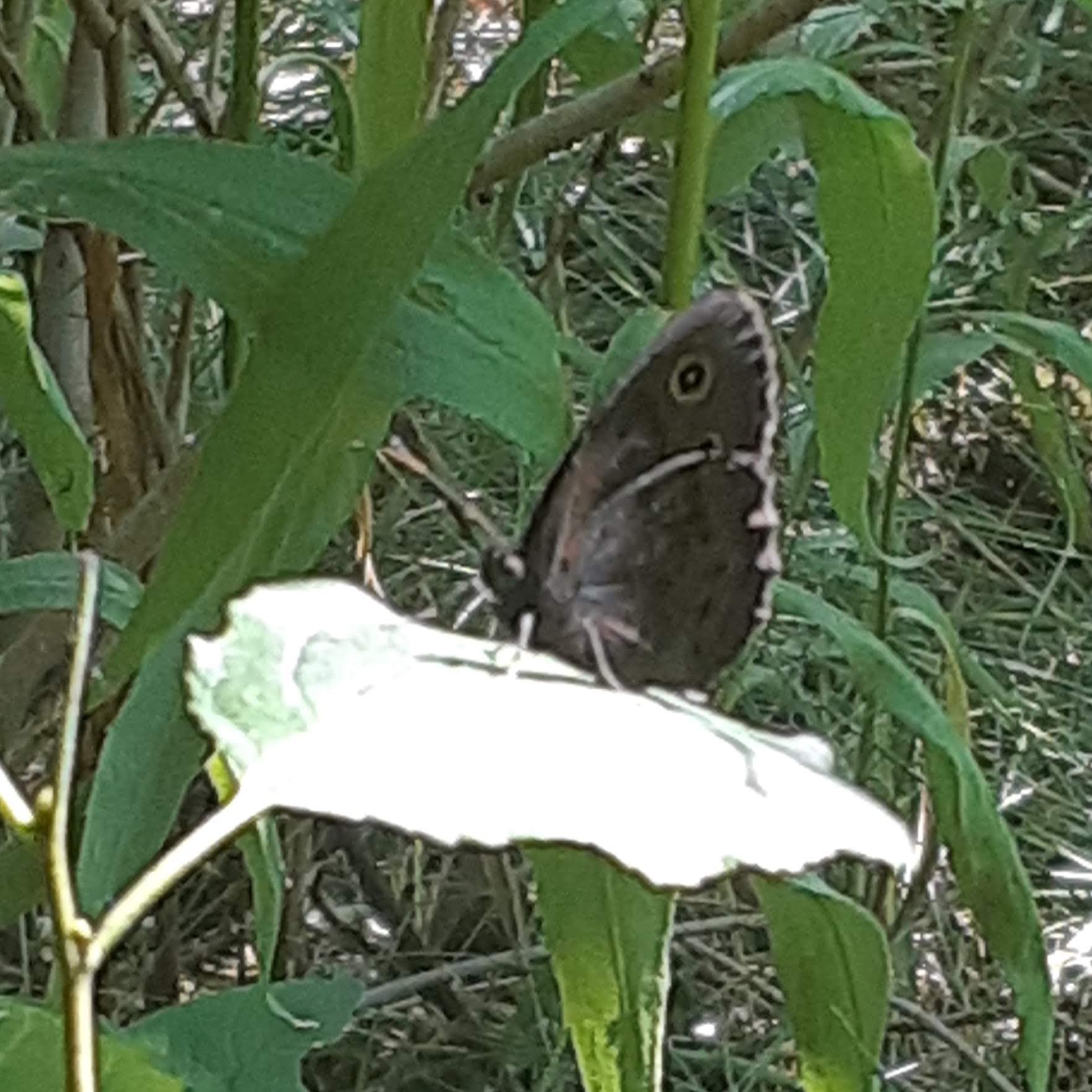
Little Wood Satyr, Megisto cymela (left) and the Common Wood Nymph, Cercyonis pegala (right)
These two I found in their classic habitats along the edges of woods. Both of these butterflies have similar tastes as Commas and Question Marks as adults, but their caterpillars however, like to eat grass. The Little Wood Satyr is the more diminutive of the two, being only about 2 inches (5 cm) from wingtip to wingtip when they are spread the the fellow above. The common wood Nymph is a little larger at about 3 inches (7.5 cm). They are both shy and fly erratically and fast when your try to take their photo!
My favourite at the top is the Eastern Tiger Swallowtail. It is the largest butterfly in Toronto with up to a 5.5 inch (14 cm) wingspread. It is another resident butterfly that overwinters as a caterpillar. One of their favourite trees that hosts their caterpillars, is the tulip tree Liriodendron tulipifera which (happily for me) the city has recently planted in my area (about 3 or 4).
Well, I think that’s it for today. If I find some more butterflies, I think I shall add them to this post later. Enjoy your gardens and parks (safely) and hopefully you can enjoy some butterfly watching as well!
 Sweet Gale Cottage